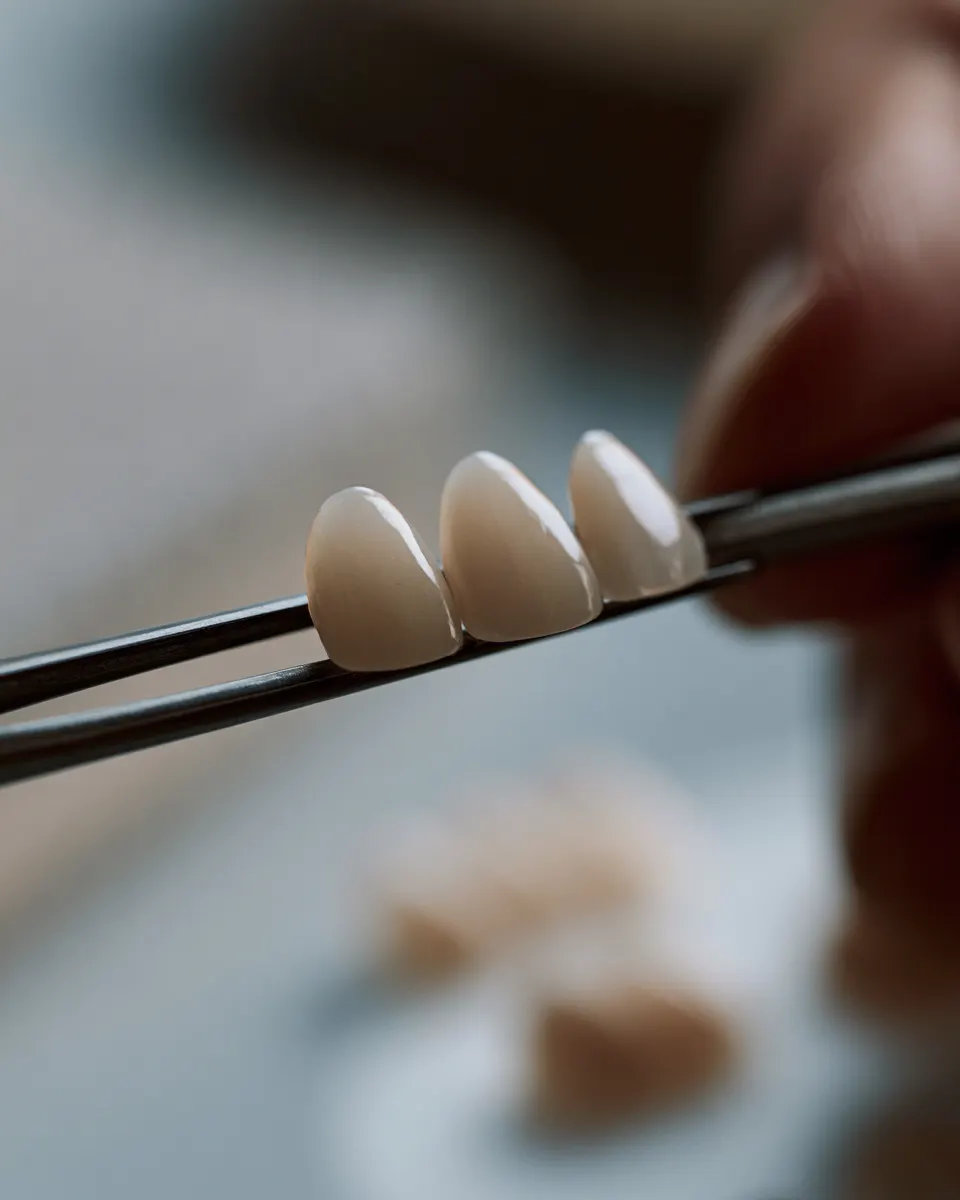
Veneers in Korea: What "No-Prep Laminate" Won't Tell You
The whitest smile isn't the prettiest one. And "no-prep" isn't for everyone.
In Korea, dental veneers are usually called "laminate," and in recent years "no-prep laminate" — veneers applied without shaving the tooth — has become very popular, driven by celebrities and television. But no-prep isn't for everyone: even the thinnest veneer adds a layer over the natural tooth, so it looks most natural on teeth that are small or set back. What matters more is subtle — a natural colour, and how the veneer is bonded.
If you’ve looked into a “Hollywood smile” in Korea, you’ve probably seen the word laminate far more often than veneer. They’re the same thing. “Laminate” comes from the idea of a thin layer bonded over a surface — which is exactly what a dental veneer is: a thin shell bonded to the front of your tooth.
For the past few years, one version has taken over: “no-prep laminate” — veneers placed without shaving down the natural tooth. Celebrities have done it, television has shown it, and now many people want it. But there are a few things the trend doesn’t quite tell you.
About “no-prep”
Here’s something worth knowing first: no-prep isn’t for everyone.
No matter how thin a veneer is made, it still adds a layer — so it sits slightly forward of your natural tooth. That means it looks most natural when your teeth are already small, or set back. If your teeth are normal-sized or slightly protruding, adding a no-prep layer can leave them looking bulky.
So it’s worth taking the phrase “no-prep works for anyone” with a little care. Whether it suits you comes down to your own teeth — and that’s something to see and discuss in person.
The whitest isn’t the prettiest
Many people ask for the same thing: bright, uniform, almost pure-white teeth — like game stones.
But here’s what we wish more people knew: the hardest veneer to make isn’t the whitest one — it’s the one that matches you. Recreating your natural tooth colour, with the right translucency, so it looks like it grew there — that’s the most delicate skill.
And the truth is, you rarely need pure white. Often just a shade brighter than your natural teeth completes a beautiful smile. Pure-white teeth can look less natural over time — and a few years later, some people no longer feel their smile is quite right, and want to change it.
What quietly makes one last: the bonding
One of the things that most affects how long a veneer lasts is, surprisingly, one you barely notice. It’s the bonding — how the veneer is attached to your tooth.
Bonded well, veneers can last five years, ten, sometimes more. Bonding is a precise, delicate process, and since it’s not something that shows on the surface, it’s hard for a patient to know beforehand.
To be honest — among the clinics we haven’t consulted with, there are surely many that bond beautifully and do excellent work, and there have been others that don’t. Our role isn’t to rank them. It’s to guide you, among the places we’ve come to know and trust through our own experience.
So what’s worth looking for
Putting it together, here’s the honest version.
A little preparation is often better than none. A modest amount of shaping (“prep”) lets the ceramist create richer colour and higher translucency — a more natural tooth than an ultra-thin no-prep shell usually can. If you’re doing this for beauty, the combination that matters is: modest prep, a colour matched to your natural teeth, and a clinic that bonds it well.
Veneers are, quietly, one of the more delicate treatments to get right — for the patient and the dentist alike.
Whether no-prep suits you, whether a natural colour can be achieved, where to begin — if you’re unsure, we’re glad to guide you, among the places we know. Just ask.
Frequently asked
Is "no-prep" laminate right for everyone?
Not for everyone. Even the thinnest veneer adds a layer over the natural tooth, so it looks most natural on teeth that are small or set back. On normal-sized or protruding teeth it can look bulky, so it's best to see and discuss it in person.
Should I get the whitest possible veneers?
Pure-white veneers can look less natural and may feel dated within a few years. A shade brighter than your natural colour often looks better and ages more gracefully. The most delicate — and often the best — result is one matched to you.
What makes veneers last a long time?
The bonding. Well-bonded veneers can last five to ten years or more. It's a part you can't easily see beforehand, so it's worth asking how the process is done.
Isn't no-prep always better because it doesn't shave the tooth?
Not necessarily. A modest amount of preparation can allow richer colour and better translucency — a more natural result. For aesthetic cases, sensible prep plus good bonding often looks better than ultra-thin no-prep.
Wondering which clinic would be right for you?
Talk to Concierge