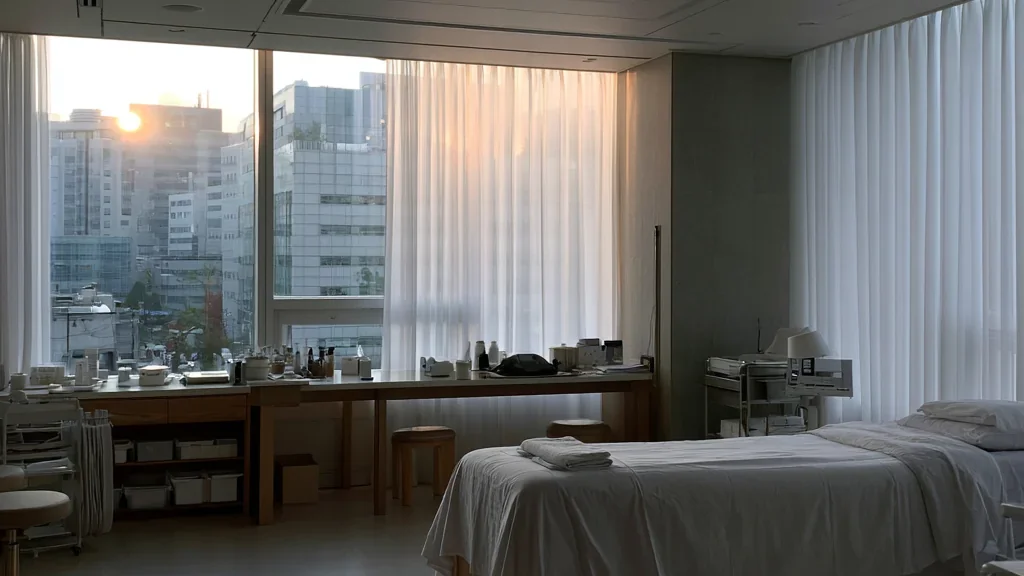
Is Cosmetic Treatment in Korea Safe? What We'd Tell a Friend
The honest answer isn't a yes or a no. It's a 'that depends on the clinic' — and on what you check first.
Korea is one of the world's most active markets for aesthetic medicine — doctors here often specialize narrowly and work at high volume, under a national medical licensing system. But safety is decided clinic by clinic, not country by country: how materials are handled, how equipment is maintained, how trained the team is, and what happens if something goes wrong. Those things don't show in a star rating, which is why the right questions matter more than the right search terms.
It’s usually the first question we’re asked, sometimes in a lowered voice: “Is it actually safe?”
It deserves an honest answer, not a brochure answer. So here is what we’d tell a friend.
How safe is treatment in Korea, honestly?
At its best, very. Korean aesthetic medicine is built on specialization — doctors who do one kind of procedure, all day, for years, under a national medical licensing system, in one of the world’s most active markets for this kind of work. Much of the technology now used widely was refined here. That practice depth is the real reason people fly in, and it’s earned.
But here’s the part the brochures skip: safety is decided clinic by clinic, not country by country. Korea has outstanding clinics and ordinary ones, like everywhere else. The question isn’t “is Korea safe” — it’s “is this clinic safe,” and that’s a harder question than it looks.
What actually makes a clinic safe?
Mostly things you can’t see from the waiting room.
How materials are stored, and whether expiry dates are respected. Whether single-use items are handled by the book. How equipment is maintained and whether devices are genuine. How much training the team around the doctor has actually had. And the one people least like to think about: whether there’s a practiced plan for the rare case where something doesn’t go to plan.
None of this shows in a star rating. We’ve written before about why reviews can’t tell you what matters most — this is the substance of it. These things happen behind the treatment-room door, and you could read a hundred reviews without learning any of them.
What questions are worth asking before you book?
You can’t inspect a clinic from abroad. But you can ask questions, and the way a clinic answers is informative in itself.
Who exactly performs my procedure? Not the clinic’s most famous name — the person in the room with you. What happens if there’s a complication? A responsible clinic has a clear, unhesitating answer. How does aftercare work once I’m home? Cross-border follow-up takes planning; “just come back” is not a plan. What am I signing? Understand the consent form before the day of treatment, not on it.
A clinic that answers these plainly, in writing, in a language you fully understand, has already told you something important about itself. And if the conversation is happening through an interpreter, make sure it’s one who knows medicine — details lost to language are one of the most common problems we see.
What do we look at, from the inside?
Our answer to the safety question is structural, not promotional. Amber & Forge began as a healthcare consulting firm, and our concierge grew out of that work — years spent alongside clinic teams, inside their everyday systems: materials handling, hygiene routines, staff training, patient pathways.
We don’t claim to make medicine risk-free; no one honest can. What we can say is this: the clinics we recommend are the ones we’ve come to know from that inside vantage point — the ones we’d choose for our own family. That’s the whole standard, and we’ve kept the list short on purpose.
If safety is the question keeping you from deciding, ask us the uncomfortable version of it. We’d rather answer that one.
Related reading
Frequently asked
Is it safe to get cosmetic treatment in Korea?
At a good clinic, yes — Korea is one of the world's most active markets for aesthetic medicine, under a national licensing system. But safety is clinic-specific: materials handling, hygiene, team training, and complication readiness vary, and they don't show from the outside.
How can a foreign patient judge if a clinic is safe?
It's genuinely hard from the outside — the things that matter happen behind the treatment-room door. What you can do: ask who performs the procedure, what happens if there's a complication, and how aftercare works once you're home. Clear answers are a good sign in themselves.
What if something goes wrong after I fly home?
Ask this before you book, not after. A responsible plan names the process — who you contact, what the clinic covers, and how follow-up happens across borders. We help our clients confirm this upfront.
Do you guarantee outcomes at the clinics you recommend?
No one can guarantee a medical outcome, and you should be careful with anyone who does. What we offer is different: we recommend only clinics we've come to know from the inside through our consulting work — the ones we'd choose for our own family.
Wondering which clinic would be right for you?
Talk to Concierge